

Aceite Vegetal Hidrogenado
Aceite Vegetal Hidrogenado (Mezcla de Cera de Soja y Coco-Albaricoque)
Origen y Fuente
El aceite vegetal hidrogenado en este contexto se refiere a una mezcla de ceras de origen vegetal cuidadosamente formulada, derivada de aceite de soja y fracciones de aceite de coco-albaricoque. Los aceites base provienen de fuentes botánicas renovables (soja y granos de coco/albaricoque) seleccionadas por sus perfiles lipídicos y compatibilidad con la piel. A través de un proceso de hidrogenación controlado, los ácidos grasos insaturados de estos aceites se estabilizan, transformándolos de aceites líquidos en ceras suaves y semisólidas. Este proceso no añade sustancias extrañas; simplemente altera la estructura molecular para mejorar la estabilidad, la textura y el rendimiento.
Hidrogenación Explicada (Sin el Lenguaje del Miedo)
La hidrogenación a menudo se malinterpreta. En la formulación cosmética, se utiliza no para la nutrición, sino para la estructura y la estabilidad. Al saturar los vulnerables dobles enlaces en los ácidos grasos, la hidrogenación:
-
previene la oxidación y la rancidez
-
mejora la vida útil
-
crea un punto de fusión consistente y predecible
-
mejora la textura sin depender de ceras de petróleo
En esta mezcla, la hidrogenación permite que los aceites vegetales suaves se comporten como ceras elegantes —limpias, estables y refinadas—, sin dejar de ser de origen vegetal.
Estructura Funcional e Inteligencia Sensorial
El componente de soja aporta untuosidad y cuerpo, mientras que la fracción de cera de coco-albaricoque proporciona un deslizamiento suave, de bajo punto de fusión y adaptable a la piel. Juntos, forman un sistema de cera que se funde a la temperatura de la piel, se extiende sin esfuerzo y deja un acabado aterciopelado y transpirable en lugar de una capa oclusiva pesada. Esta mezcla imita el comportamiento sensorial de las ceras de lujo manteniendo un origen botánico.
Función y Beneficios para la Piel
Sobre la piel, esta mezcla de cera vegetal hidrogenada actúa como un ingrediente emoliente y de soporte de la barrera cutánea. Ayuda a reducir la pérdida transepidérmica de agua, suaviza la textura de la superficie y protege la piel de la sequedad ambiental. A diferencia de las ceras más duras, no se siente rígida ni áspera; en cambio, acolcha la piel con una película suave y flexible que mejora la comodidad y la flexibilidad.
Función en la Formulación y Beneficios de Rendimiento
En la formulación, el Aceite Vegetal Hidrogenado (Mezcla de Cera de Soja y Coco-Albaricoque) desempeña un papel estructural y estabilizador fundamental. Este:
-
aporta firmeza a bálsamos, mantecas y velas de loción
-
mejora la estabilidad al calor y la resistencia a la sudoración
-
mejora la consistencia ante cambios de temperatura
-
favorece una distribución uniforme de la fragancia y el aceite
Su comportamiento de fusión limpia lo hace ideal para productos que pasan de sólido a líquido al contacto con la piel.
Usos Típicos en el Cuidado de la Piel y el Cuerpo
Esta mezcla de cera se utiliza comúnmente en bálsamos corporales, velas de loción, barras de masaje, productos labiales, hidratantes sólidos, mantecas batidas y cuidado corporal ritual. Es especialmente valorada en formulaciones anhidras o con bajo contenido de agua donde la textura, la fusión y la estabilidad son primordiales.
Por qué Unicorn Tears lo Utiliza
Unicorn Tears utiliza Aceite Vegetal Hidrogenado (Mezcla de Cera de Soja y Coco-Albaricoque) de forma intencionada y transparente —no como relleno, sino como una estructura botánica orientada al rendimiento. Permite a la marca lograr una fusión, estabilidad y elegancia sensorial lujosas sin ceras de petróleo ni polímeros sintéticos. Su origen vegetal, su comportamiento adaptativo a la piel y su acabado refinado se alinean perfectamente con la filosofía de Unicorn Tears: formulación inteligente, ingredientes honestos y una magia que se siente tan bien como se ve.
Entradas de blog
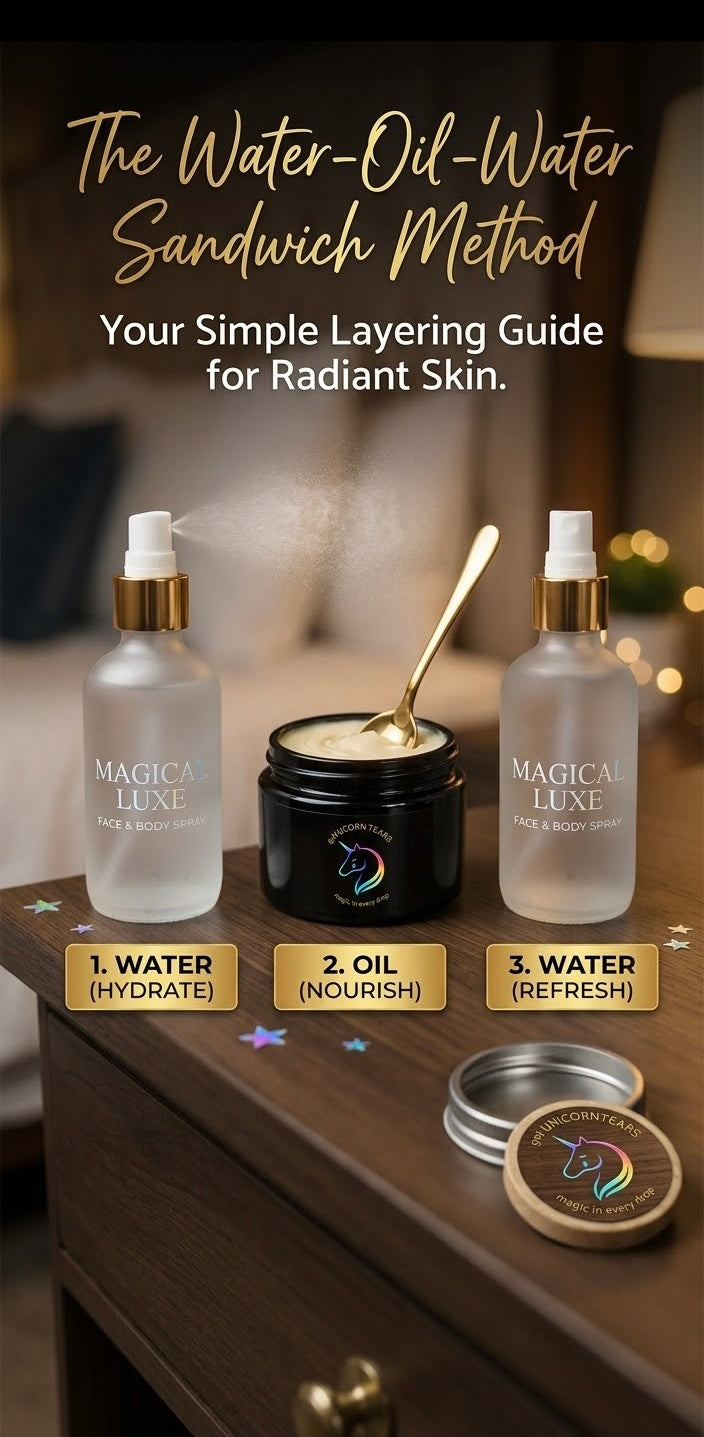
El sándwich de agua, aceite y agua: por qué las capas son importantes en el cuidado de la piel
El sándwich de agua-aceite-agua es un método sencillo de aplicación de capas de cuidado de la piel basado en cómo funciona la humedad en la piel. En lugar de aplicar un solo producto y esperar qu...
Leer más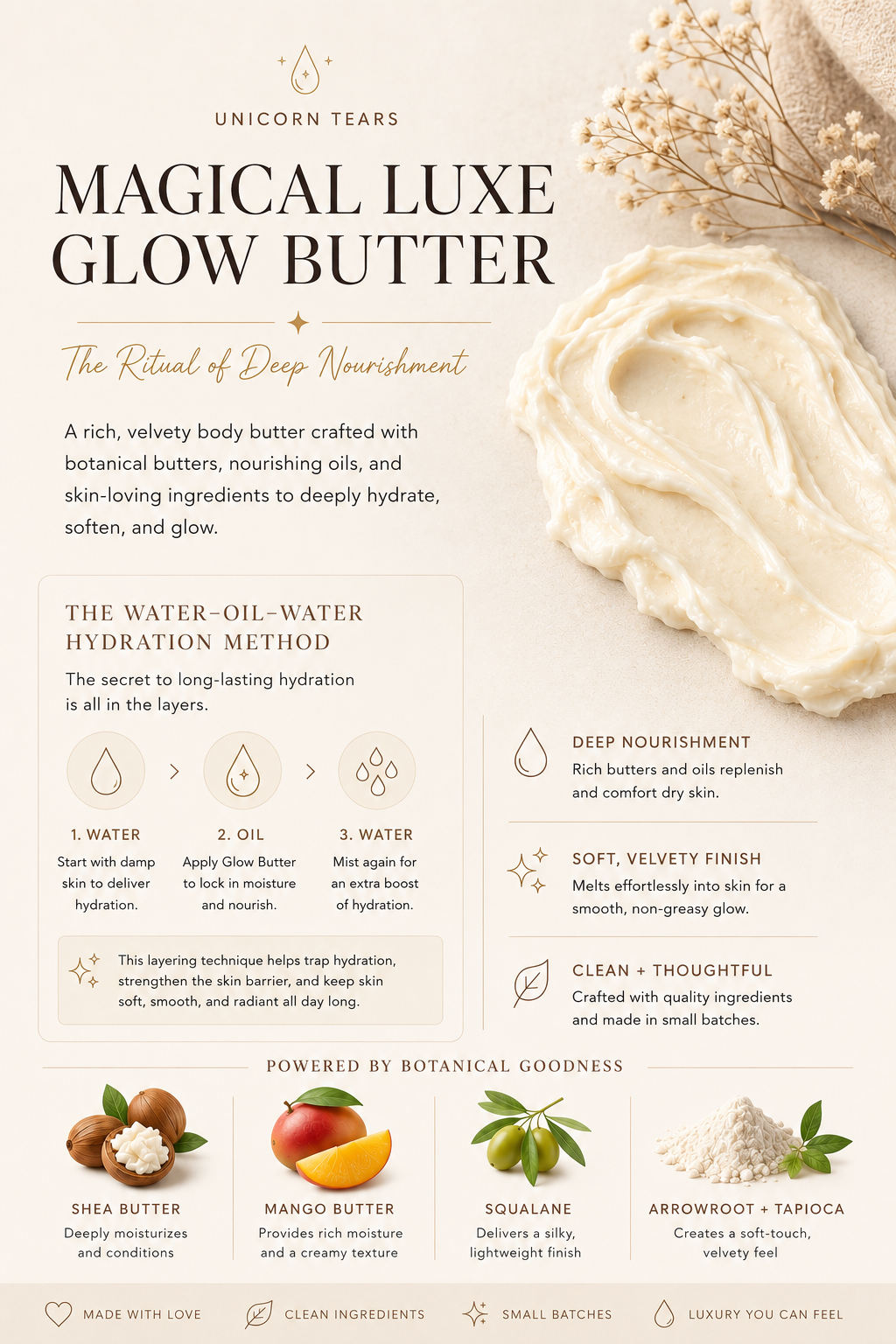
Mantequilla Mágica Iluminadora Luxe: El Ritual de Nutrición Profunda
Descubre el ritual detrás de nuestra lujosa Mantequilla Magical Luxe Glow y aprende cómo el método de hidratación «agua-aceite-agua» ayuda a retener la humedad para una piel suave, radiante y profu...
Leer más
Spray de magnesio para dormir y relajación: un ritual nocturno para un descanso más profundo
Spray de Magnesio para Dormir que favorece la relajación y el sueño reparador. Un spray corporal de alta concentración y origen natural para uso nocturno.
Leer más