

Coconut Oil
COCONUT OIL (COCOS NUCIFERA OIL)
Origin & Source
Coconut Oil is extracted from the fresh or dried flesh (kernel) of the coconut fruit from the coconut palm (Cocos nucifera), a tree native to tropical coastal regions across Southeast Asia, the Pacific Islands, India, the Caribbean, and parts of Africa. For centuries, coconut oil has been a cornerstone of traditional beauty rituals in Ayurvedic, Polynesian, and Southeast Asian cultures—used to protect skin and hair from sun, salt, wind, and humidity. Cosmetic-grade coconut oil is typically cold-pressed or expeller-pressed to preserve purity and beneficial fatty acids.
Fatty Acid Profile & Biochemical Intelligence
Coconut oil is uniquely composed of medium-chain fatty acids, with lauric acid as its dominant component, along with caprylic, capric, myristic, and palmitic acids. Lauric acid is particularly notable for its antimicrobial properties and strong affinity for skin proteins. This fatty acid profile gives coconut oil its semi-solid texture at room temperature and its ability to melt quickly upon skin contact, delivering immediate softness and occlusive protection.
Skin Function & Benefits
On the skin, Coconut Oil acts as a rich emollient that softens, smooths, and reduces moisture loss. It forms a protective lipid layer that helps shield the skin from environmental stressors while improving overall comfort. Its naturally antimicrobial properties can help support skin balance when used appropriately. Coconut oil is especially beneficial for dry, rough, or compromised skin, though it is typically balanced with lighter oils in facial formulations to ensure breathability and comfort.
Formulation Role & Sensory Profile
In formulation, coconut oil contributes richness, structure, and a comforting melt. It enhances glide and spreadability in balms, body butters, and cleansing products while providing firmness at cooler temperatures. Sensory-wise, coconut oil delivers a familiar, comforting feel—smooth, nourishing, and protective—without artificial slickness. Its natural solidity also helps anchor softer butters and waxes in anhydrous formulations.
Typical Uses in Skincare & Body Care
Coconut Oil is commonly used in body butters, balms, cleansing balms, soaps, massage products, hair treatments, lip products, and solid moisturizers. In skincare, it is often paired with lighter oils or absorbent powders to balance richness and enhance skin feel.
Cultural & Ritual Significance
Beyond its functional benefits, coconut oil carries deep cultural symbolism. In many traditions, it represents purity, nourishment, protection, and life force. It has been used ceremonially for anointing, healing, and daily self-care—connecting physical nourishment with ritual and intention.
Why Unicorn Tears Uses It
Unicorn Tears uses Coconut Oil intentionally and thoughtfully—for its protective nourishment, cultural heritage, and sensorial comfort. When included, it is carefully balanced within the formulation to provide softness and protection without heaviness. Its timeless role in traditional beauty rituals aligns perfectly with the brand’s philosophy of blending ancestral wisdom with modern, intelligent luxury.
Blog posts

Bakuchiol vs. Retinol: What Science Says About This Gentle Skincare Alternative
Can bakuchiol deliver the skin-renewing benefits of retinol with less irritation? Discover what clinical research reveals about this plant-derived ingredient, its potential benefits for fine lines,...
Read more
Make them say WOW! Why Layering Matters in Skincare
Make them say WOW! The Water–Oil–Water sandwich is a simple skincare layering method based on how moisture works on the skin. Instead of applying one product and hoping it does everything, this me...
Read more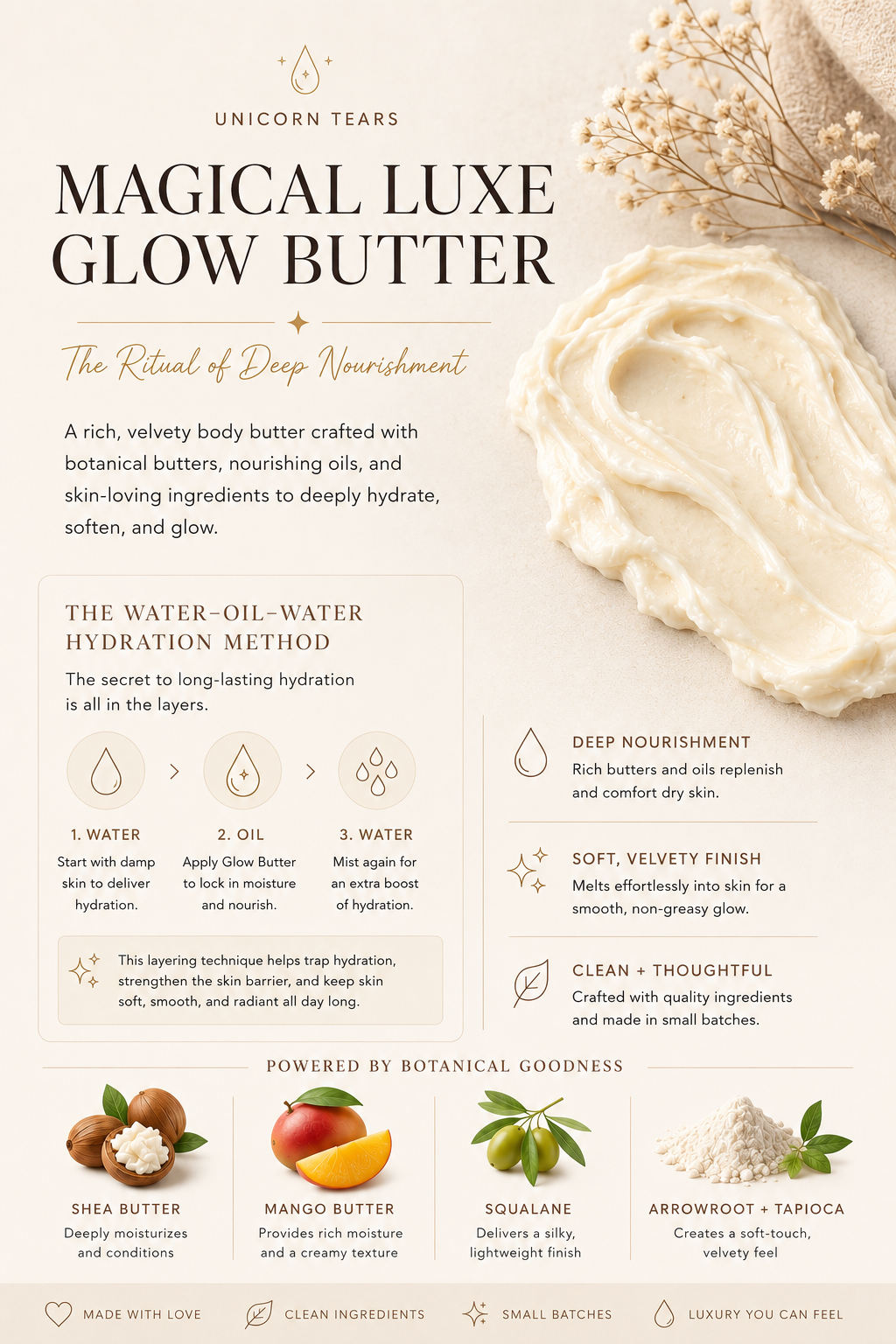
Magical Luxe Glow Butter: The Ritual of Deep Nourishment
Discover the ritual behind our luxurious Magical Luxe Glow Butter and learn how the “water–oil–water” hydration method helps lock in lasting moisture for soft, radiant, deeply nourished skin. Craft...
Read more