
Myrrh Essential Oil
Myrrh Essential Oil
(Commiphora myrrha / Commiphora molmol Resin Oil)
Origin & Source
Myrrh Essential Oil is steam-distilled from the aromatic oleoresin of trees belonging to the Commiphora genus, native to arid regions of East Africa and the Arabian Peninsula, particularly Somalia, Ethiopia, and Yemen. The resin is harvested by carefully incising the bark, allowing sap to exude and harden into amber-colored tears—an ancient practice that has remained largely unchanged for thousands of years. Myrrh has been revered across civilizations, from ancient Egypt and Mesopotamia to Greece and the Middle East, as a sacred substance used in healing, anointing, and ceremonial rituals.
Phytochemical Profile & Restorative Intelligence
Myrrh essential oil contains a complex blend of sesquiterpenes, furanoeudesma-1,3-diene, curzerene, and commiphoric acids, compounds known for their soothing, antimicrobial, and skin-restorative properties. This molecular profile gives myrrh its grounding behavior—supporting barrier repair, calming visible irritation, and promoting skin resilience. Unlike stimulating essential oils, myrrh works slowly and deeply, encouraging balance rather than activation.
Skin Function & Benefits
On the skin, Myrrh Essential Oil helps support healing, calm dryness, and improve the appearance of mature or stressed skin when properly diluted. It is particularly valued in formulations for dry, cracked, sensitive, or environmentally compromised skin. Myrrh’s gentle astringent qualities can help refine texture while its resinous nature supports protection and repair.
Emotional & Sensory Experience
Aromatically, myrrh is deep, warm, resinous, and slightly smoky, with a subtle bitterness that feels ancient and contemplative. Emotionally, it is associated with grounding, introspection, and emotional protection. In aromatherapy traditions, myrrh is considered an oil of stillness and inner strength, often used to support meditation, emotional release, and spiritual reflection. In ritual skincare, myrrh creates a sense of depth and reverence—slowing the moment and inviting presence.
Cultural & Sacred Significance
Myrrh has been one of the most spiritually significant substances in human history. It was used in Egyptian embalming practices, sacred incense, and healing salves, and is famously known as one of the three gifts offered in ancient religious traditions. Across cultures, myrrh symbolizes purification, protection, and transition, bridging physical care with spiritual meaning.
Formulation Role & Performance Considerations
In formulation, myrrh essential oil serves as both a functional skin-supportive ingredient and an aromatic base note. It anchors lighter fragrances, adds depth, and enhances longevity in scent compositions. Myrrh blends beautifully with frankincense, copaiba, rose, jasmine, sandalwood, vanilla, and citrus oils. Because of its potency and resinous nature, it is used at low, precise concentrations and always within IFRA dermal guidelines.
Typical Uses in Skincare & Ritual Products
Myrrh essential oil is commonly used in facial oils, serums, creams, balms, lip products, body oils, perfumes, candles, and ceremonial or ritual skincare collections. It is especially valued in formulations designed for evening use, emotional grounding, or skin renewal.
Why Unicorn Tears Uses It
Unicorn Tears uses Myrrh Essential Oil for its profound restorative intelligence, emotional depth, and sacred heritage. It brings strength, calm, and resilience to the skin while honoring ancient wisdom. Myrrh embodies the brand’s philosophy that skincare can be both effective and meaningful—offering protection, balance, and quiet magic through every ritual.
Blog posts

Bakuchiol vs. Retinol: What Science Says About This Gentle Skincare Alternative
Can bakuchiol deliver the skin-renewing benefits of retinol with less irritation? Discover what clinical research reveals about this plant-derived ingredient, its potential benefits for fine lines,...
Read more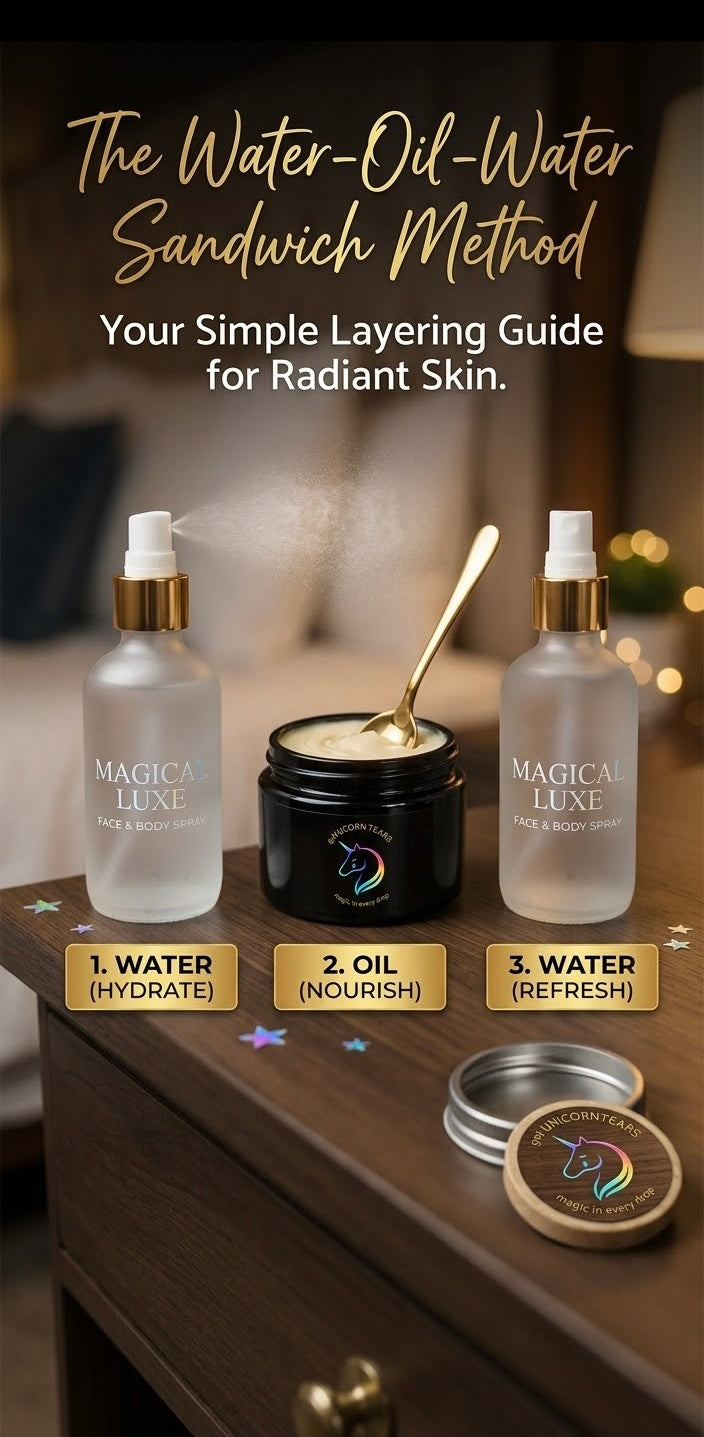
Make them say WOW! Why Layering Matters in Skincare
Make them say WOW! The Water–Oil–Water sandwich is a simple skincare layering method based on how moisture works on the skin. Instead of applying one product and hoping it does everything, this me...
Read more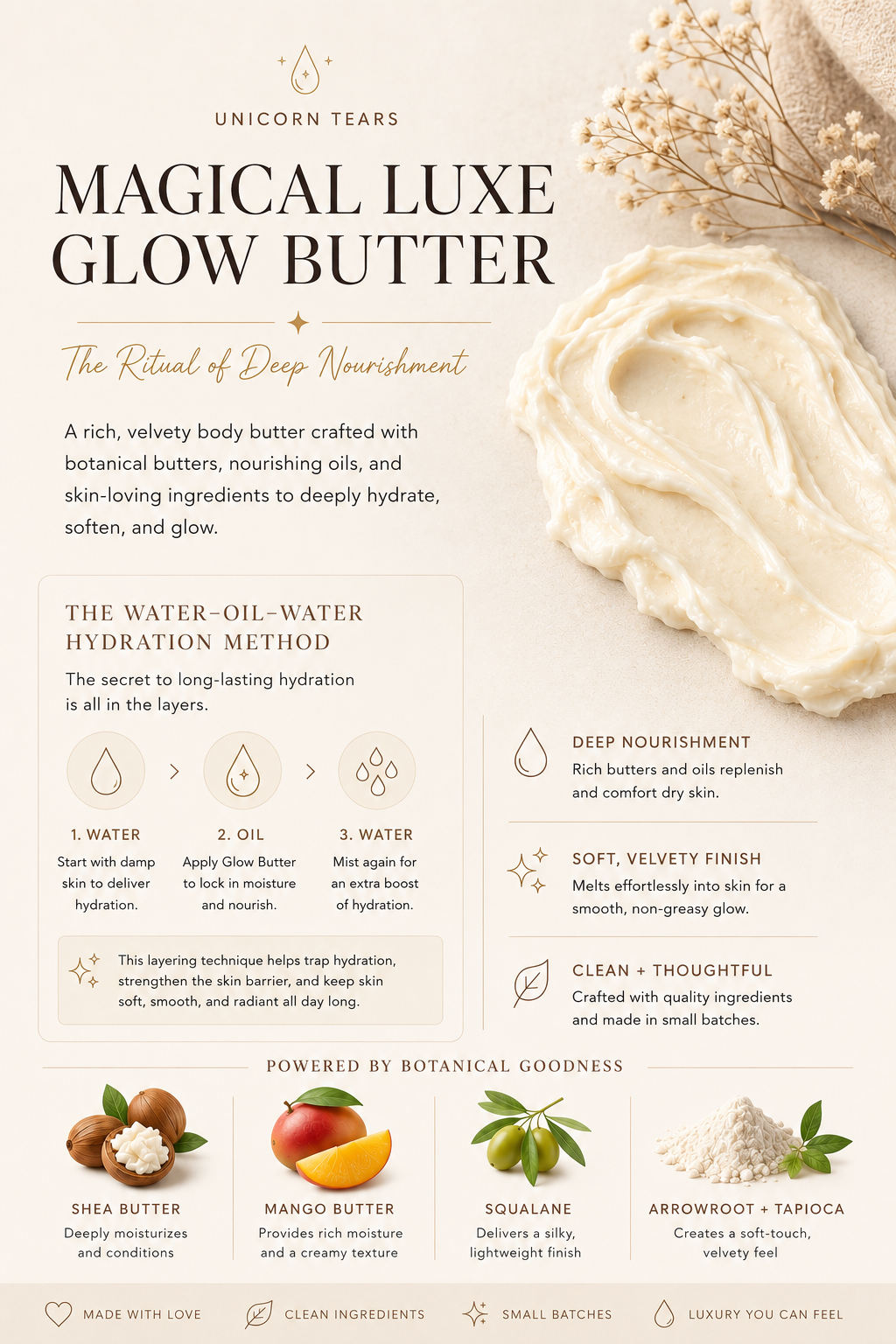
Magical Luxe Glow Butter: The Ritual of Deep Nourishment
Discover the ritual behind our luxurious Magical Luxe Glow Butter and learn how the “water–oil–water” hydration method helps lock in lasting moisture for soft, radiant, deeply nourished skin. Craft...
Read more