
Rosmarinus Officinalis (Rosemary) Leaf Oil,
(Rosemary Essential Oil)
Origin & Botanical Background
Rosmarinus Officinalis Leaf Oil, commonly known as Rosemary Essential Oil, is obtained through the steam distillation of the leaves of the rosemary plant (Rosmarinus officinalis, now also classified as Salvia rosmarinus). Native to the Mediterranean region, rosemary has been used for centuries in herbal medicine, ritual purification, and beauty practices. The plant thrives in sun-drenched, mineral-rich soils, producing aromatic leaves rich in volatile compounds that are captured during distillation.
Historically, rosemary has symbolized clarity, vitality, and remembrance, often used in both therapeutic and ceremonial contexts.
Composition & Aromatic Chemistry
Rosemary essential oil contains a complex profile of naturally occurring compounds, including 1,8-cineole (eucalyptol), camphor, alpha-pinene, and borneol. These constituents contribute to its fresh, herbaceous, slightly camphorous aroma, as well as its functional properties in skincare and wellness formulations. The exact composition can vary depending on the chemotype, harvest region, and distillation method, which influences both scent and performance.
Skin Benefits & Performance
In skincare, Rosemary Leaf Oil is valued for its ability to support clarity, balance, and overall skin vitality. It has natural antioxidant properties, helping protect the skin from environmental stressors that contribute to premature aging. It is also known to support a clearer-looking complexion by helping reduce the appearance of congestion and excess oil.
Additionally, rosemary oil is often used in scalp and hair formulations for its ability to support circulation and promote a healthy scalp environment, contributing to the appearance of stronger, more vibrant hair.
Sensory & Ritual Experience
Aromatically, rosemary is fresh, green, and invigorating, with a clean herbal sharpness that awakens the senses. It brings a feeling of mental clarity, focus, and renewal—making it a powerful addition to both skincare and ritual products. In formulations, it adds brightness and structure to blends, balancing sweeter or heavier notes with its crisp, uplifting character.
Formulation Role & Considerations
Rosemary Leaf Oil functions as both a fragrance component and a functional botanical extract. It is typically used at low concentrations due to its potency, ensuring it enhances the formula without overwhelming the skin or scent profile. It blends beautifully with citrus oils, lavender, eucalyptus, mint, and wood-based aromatics.
Because it is a concentrated essential oil, careful formulation is essential to maintain skin comfort—particularly for sensitive skin types.
Safety, Compatibility & Transparency
Rosemary Essential Oil should always be used within IFRA-recommended guidelines for leave-on products. When properly diluted, it is generally well tolerated, though it may be stimulating for very sensitive skin. It is compatible with plant oils, humectants, peptides, and antioxidant systems. As with all essential oils, it is included with intention, precision, and respect for skin sensitivity.
Why Unicorn Tears Uses It
Unicorn Tears uses Rosemary Leaf Oil for its ability to bring clarity, energy, and botanical intelligence into formulations. It reflects the brand’s philosophy that skincare should engage both skin and senses, supporting not only visible results but also emotional experience. Rosemary adds a subtle vitality—refreshing the skin while awakening the ritual.
For Unicorn Tears, rosemary represents clarity and renewal—a timeless botanical that sharpens the senses, supports balance, and brings a quiet strength to every formulation.
Blog posts

Bakuchiol vs. Retinol: What Science Says About This Gentle Skincare Alternative
Can bakuchiol deliver the skin-renewing benefits of retinol with less irritation? Discover what clinical research reveals about this plant-derived ingredient, its potential benefits for fine lines,...
Read more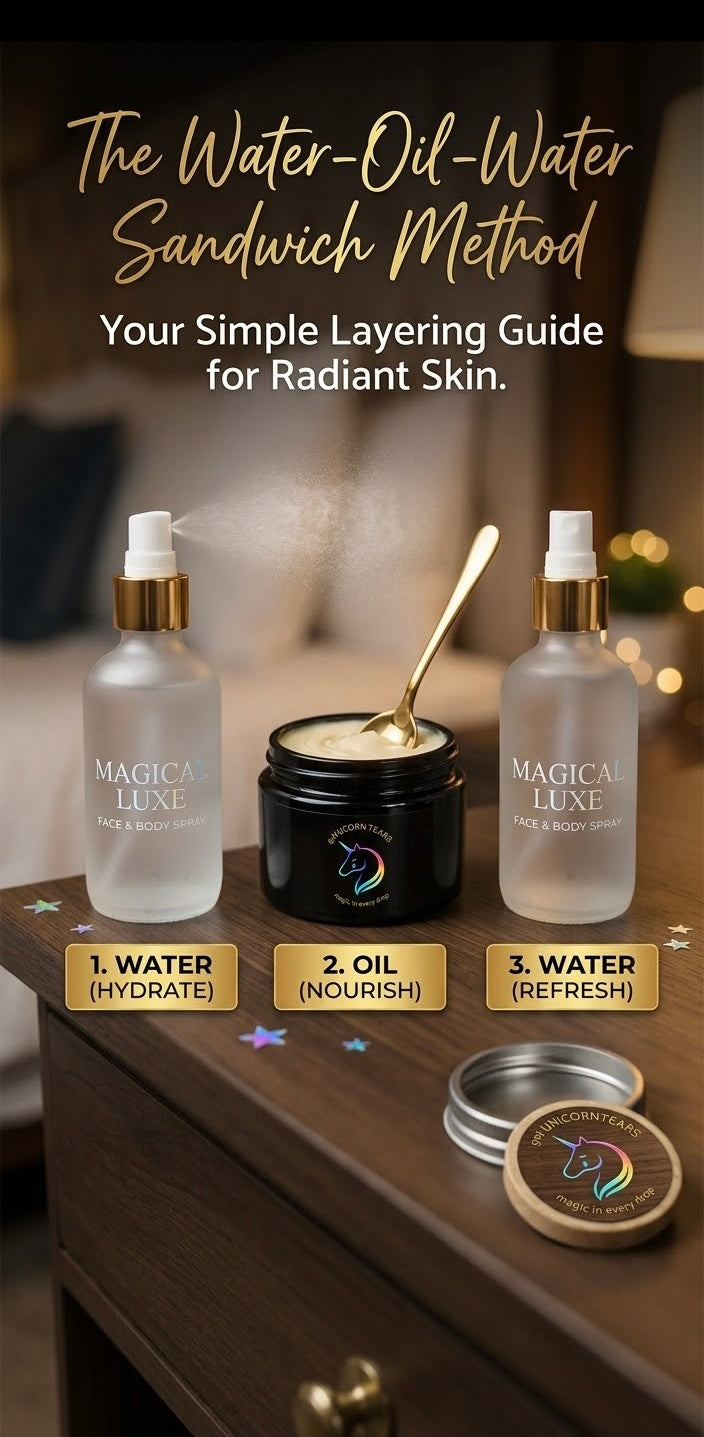
Make them say WOW! Why Layering Matters in Skincare
Make them say WOW! The Water–Oil–Water sandwich is a simple skincare layering method based on how moisture works on the skin. Instead of applying one product and hoping it does everything, this me...
Read more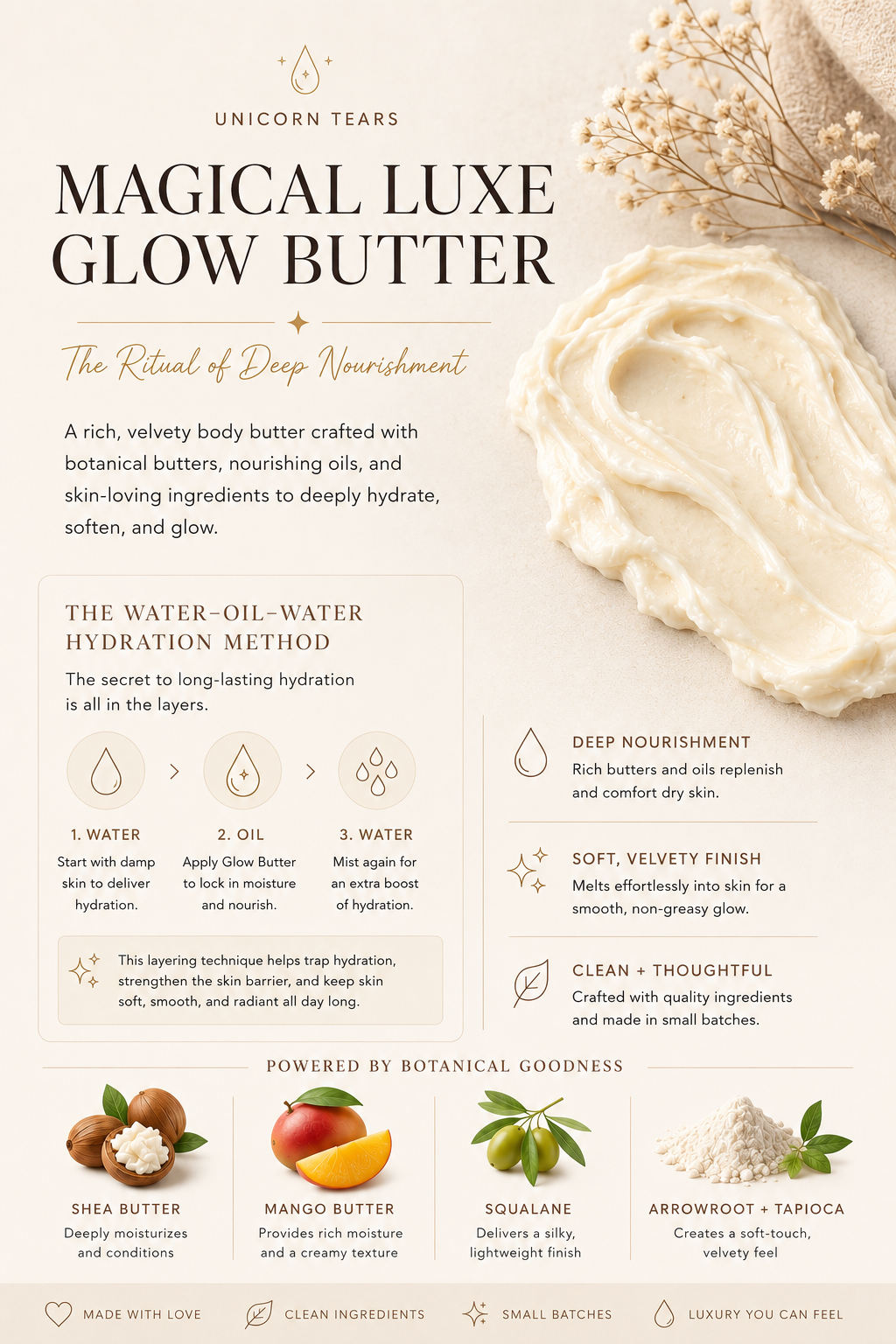
Magical Luxe Glow Butter: The Ritual of Deep Nourishment
Discover the ritual behind our luxurious Magical Luxe Glow Butter and learn how the “water–oil–water” hydration method helps lock in lasting moisture for soft, radiant, deeply nourished skin. Craft...
Read more