

Sodium Benzoate
SODIUM BENZOATE
Origin & Source
Sodium Benzoate is the sodium salt of benzoic acid, a compound that occurs naturally in plants such as cranberries, plums, apples, cloves, and cinnamon. Cosmetic-grade sodium benzoate is produced by neutralizing benzoic acid (typically obtained through fermentation or plant-based synthesis) with sodium. While refined for purity and consistency, its origin aligns with naturally occurring preservation mechanisms found in fruit and botanical materials.
Biochemical Profile & Antimicrobial Function
Sodium Benzoate functions as a mild, effective antimicrobial preservative, primarily active against yeasts, molds, and certain bacteria. It works by disrupting microbial cellular metabolism, preventing microorganisms from growing and reproducing. Its effectiveness is pH-dependent, performing best in slightly acidic formulas (generally below pH 5.5), which closely mirrors healthy skin’s natural acid mantle.
Because its action targets microbial survival rather than aggressively destroying cell membranes, sodium benzoate is considered gentler and more skin-compatible than many synthetic broad-spectrum preservatives.
Skin Function & Tolerance
On the skin itself, sodium benzoate does not provide treatment benefits or sensory changes. Its role is purely protective, ensuring product safety without affecting hydration, texture, or skin feel. When used within recommended cosmetic limits and properly balanced in formulation, sodium benzoate is non-sensitizing, non-drying, and suitable even for sensitive or compromised skin.
Formulation Role & Preservative Synergy
In formulation, sodium benzoate is most effective when used as part of a synergistic preservation system, rather than alone. It is commonly paired with potassium sorbate, GDL, sodium citrate, and sodium gluconate to create a hostile environment for microbial growth while remaining gentle to the skin. This system-based approach allows formulators to avoid harsher preservatives while still maintaining robust product safety and shelf stability.
Sodium benzoate also benefits from chelators like sodium gluconate, which bind metal ions that could otherwise reduce preservative efficacy.
Typical Uses in Skincare & Body Care
Sodium Benzoate is widely used in creams, lotions, facial mists, toners, serums, sprays, cleansers, and botanical water–based formulations. It is especially important in products containing aloe, rose water, witch hazel, or other plant-derived aqueous ingredients that require dependable preservation.
Why Unicorn Tears Uses It
Unicorn Tears uses Sodium Benzoate as part of a transparent, intentional preservation philosophy—favoring balance, synergy, and skin compatibility over aggressive chemical control. Its fruit-derived origin, excellent safety profile, and effectiveness within skin-friendly pH ranges allow the brand to protect products responsibly while honoring its commitment to gentle, thoughtfully engineered luxury skincare.
Blog posts

Bakuchiol vs. Retinol: What Science Says About This Gentle Skincare Alternative
Can bakuchiol deliver the skin-renewing benefits of retinol with less irritation? Discover what clinical research reveals about this plant-derived ingredient, its potential benefits for fine lines,...
Read more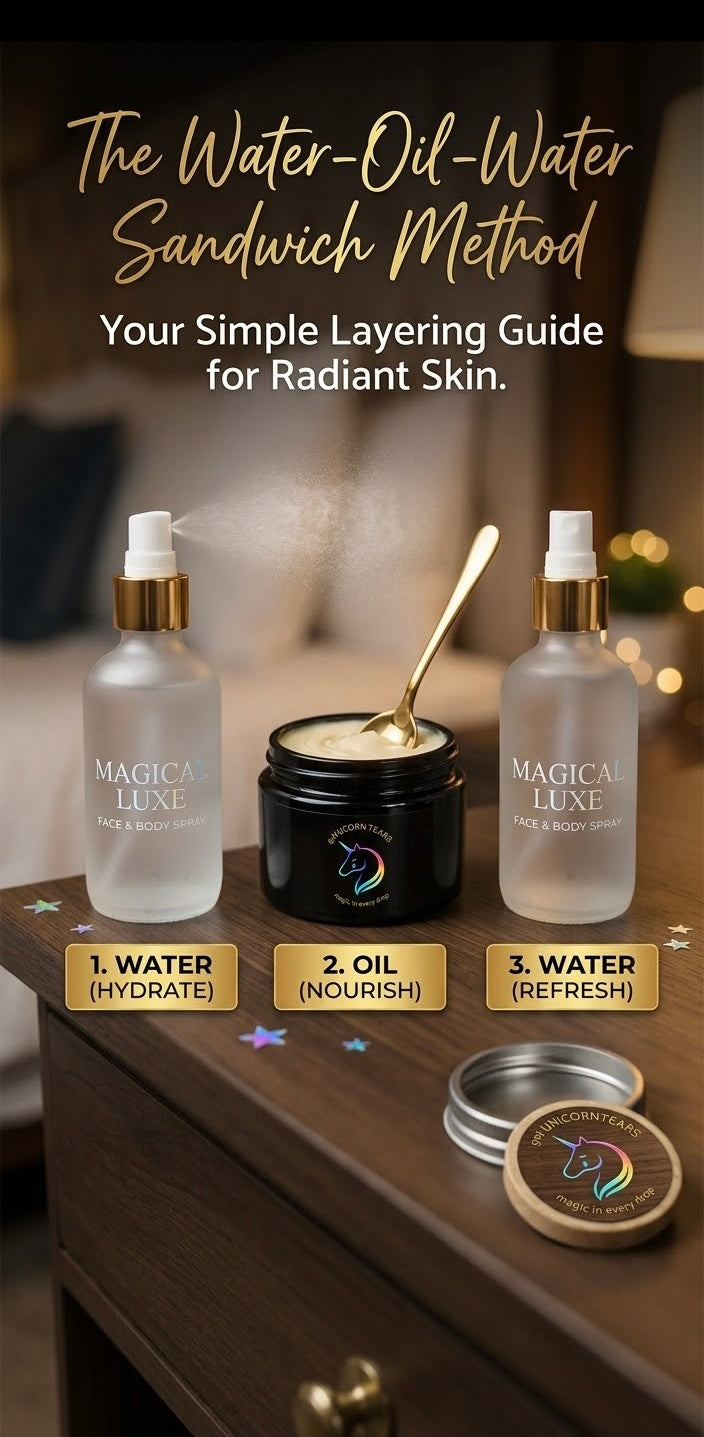
Make them say WOW! Why Layering Matters in Skincare
Make them say WOW! The Water–Oil–Water sandwich is a simple skincare layering method based on how moisture works on the skin. Instead of applying one product and hoping it does everything, this me...
Read more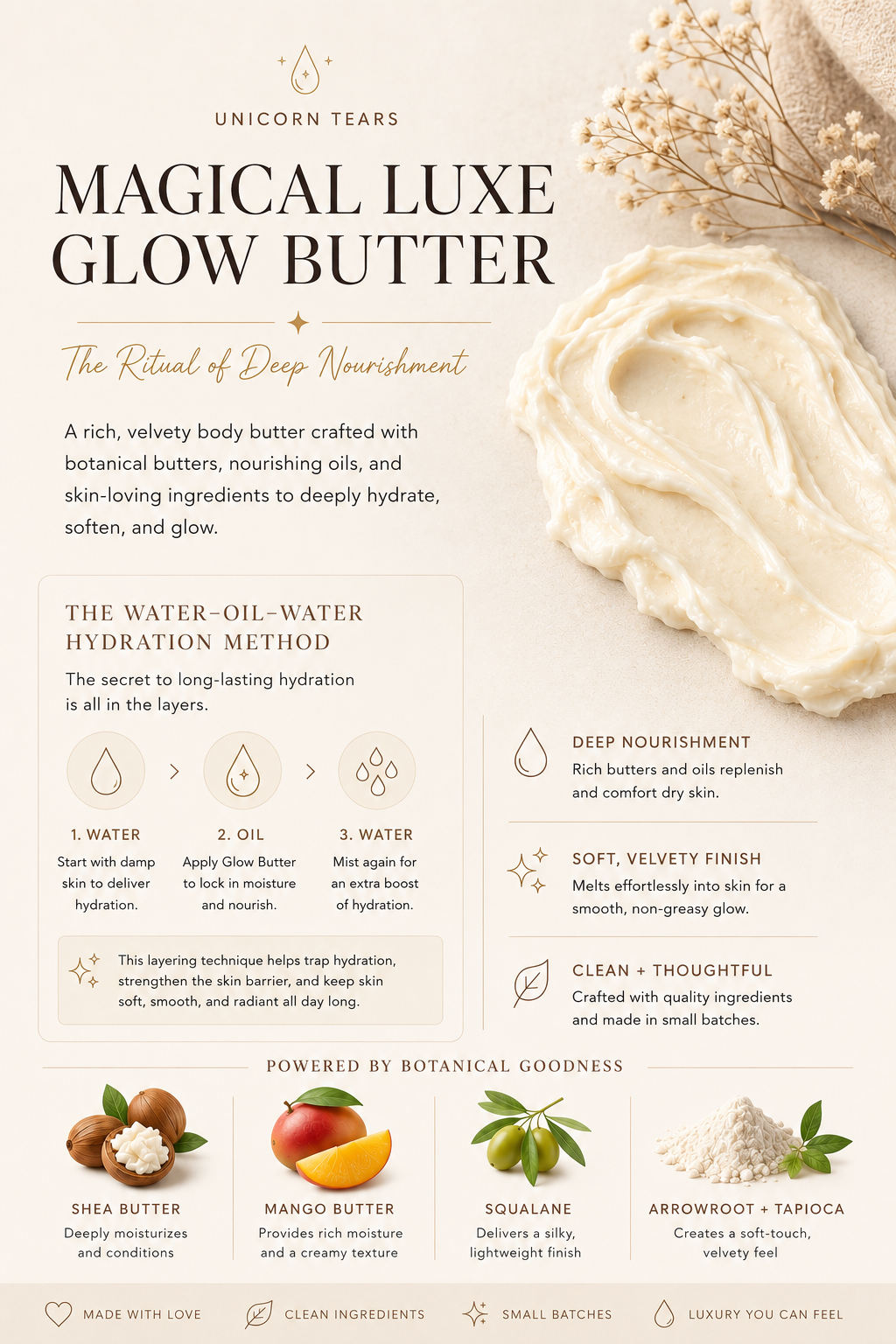
Magical Luxe Glow Butter: The Ritual of Deep Nourishment
Discover the ritual behind our luxurious Magical Luxe Glow Butter and learn how the “water–oil–water” hydration method helps lock in lasting moisture for soft, radiant, deeply nourished skin. Craft...
Read more